A reading belongs to a location
A temperature logger does not measure an entire shipment. It measures the response of its sensing element at a particular location and time. A device near a refrigeration outlet may see a different thermal history from a device beside a door, against a wall or inside insulated packaging. These are not automatically conflicting results. They may describe genuine spatial differences.
Begin with the monitoring objective. Are you checking vehicle air conditions, the performance of a qualified shipping container, or a product-representative location? Record that purpose before selecting a device. A highly accurate instrument in an unsuitable position can produce a precise answer to the wrong question.
Calibration is a chain, not a sticker
Calibration compares an instrument with a reference under specified conditions. The useful evidence is the certificate and its scope: device identity, calibration points, results, measurement uncertainty and traceability. Check that the chosen points are relevant to the intended operating range. A date label alone does not explain whether the instrument is suitable for the decision being made.
Calibration intervals should be justified through the organisation’s quality system, intended use, device behaviour and risk. Review damage, unexplained drift and out-of-tolerance findings rather than assuming that every logger remains reliable until its next scheduled check. Where a later calibration reveals a problem, assess the potential effect on earlier shipment decisions.
Time can change the story
Separate the sampling interval from the transmission interval. A logger might take measurements frequently but upload them in batches. A dashboard may therefore show old evidence even while the device is working correctly. Retain the measurement timestamp, the receipt timestamp and the relevant time zone or UTC offset.
Clock drift also matters when matching a trace to a door opening, warehouse transfer or refrigeration alarm. Synchronisation should be understood and documented. If the system adjusts timestamps, preserve the original values and the correction method so that later reviewers can reconstruct the sequence rather than simply trusting a smoothed display.
Missing transmission is not missing temperature
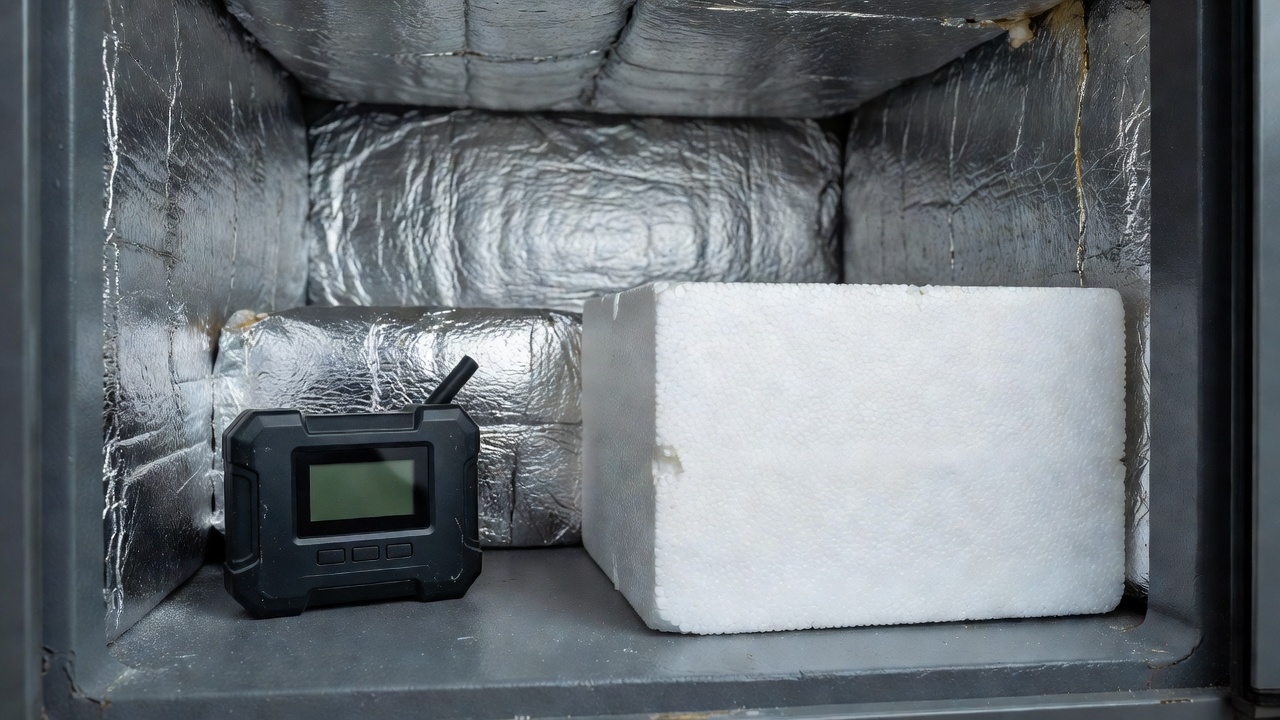
A refrigerated trailer, airport cargo building or remote road segment may interrupt radio connectivity. Some devices continue storing readings locally; others have limited buffering or different failure behaviour. Verify the actual configuration. A blank dashboard interval should remain a visible gap until the underlying data are recovered and checked.
When a delayed upload arrives, examine sequence numbers, timestamps and storage limits. Do not silently interpolate the gap and then treat the resulting curve as observation. Interpolation may help visualisation, but estimated points need distinct labels and must not conceal uncertainty about a potentially critical exposure.
| Evidence | What to establish | What it does not prove |
|---|---|---|
| Calibration certificate | Instrument performance at stated points | Correct placement in this load |
| Local device log | Available recorded measurements | Immediate remote visibility |
| Placement record | Where and how the sensor travelled | Uniform conditions throughout the cargo |
| Receipt timestamp | When the platform received data | When the temperature was measured |
Keep the raw trace alongside the display
Filtering, rounding and aggregation can make a trace easier to read while changing the apparent duration or size of an event. Retain the source data, the transformations and the display settings. A daily average is not a substitute for the underlying sequence when assessing a short excursion.
Build a practical pre-departure check: confirm device identity, battery condition, available memory, clock settings, placement and shipment association. At receipt, reconcile the device and load identifiers before interpreting the data. These ordinary controls often contribute more to defensible monitoring than adding another layer of analytics.
Better interpretation begins with knowing exactly what was measured, where and when.
For measurement terminology and uncertainty, consult the JCGM publications hosted by BIPM. For European medicinal-product distribution, the EU Good Distribution Practice guidelines provide relevant context. Neither source supplies a universal temperature limit for every category of goods.