Cold-chain field notes · Independent guidance
A temperature alert is only the beginning
Intelligent monitoring can reveal a changing shipment. It cannot, on its own, decide what that change means for the goods inside.
Follow the evidence from a sensor reading to an accountable operational response.
Trace an exception response
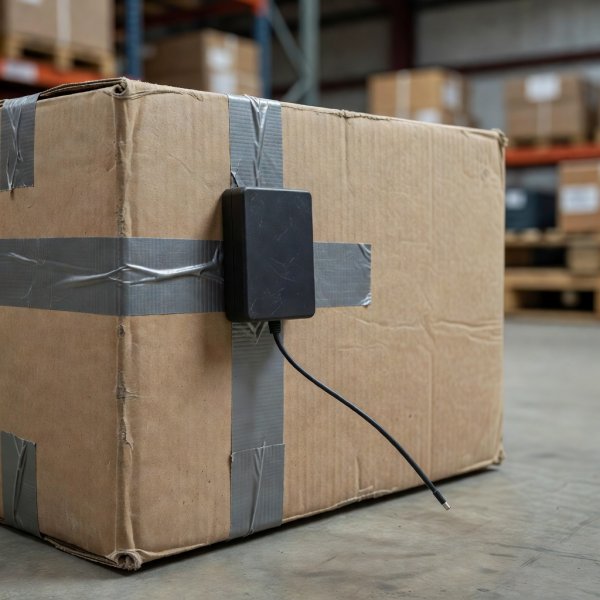

Dispatch 01 / Context
The moment a shipment drifts
A door opens during a transfer. A probe records warmer air. Connectivity drops before the next transmission. The operations team sees an alert, but the quality team still needs to establish exposure, duration and product relevance.
This is the gap that matters: not simply detecting a threshold crossing, but making a defensible decision with incomplete evidence. AI can help prioritise that work. It does not remove it.
A measured temperature, an inferred risk and a release decision are three different things.
These dispatches are for logistics planners, quality teams and technical buyers. They examine monitoring claims without assuming that one temperature range, model or response procedure fits every shipment.
Dispatch 02 / Measurement
What the sensor actually knows
A logger measures its own sensing element. Its relationship to air, packaging or product depends on placement, response time and the thermal behaviour of the load.
Illustrative trace — not live telemetry
Relative air-temperature movement during a hypothetical transfer. No product limits or numerical measurements are implied.
A falling trace shows recovery at this measurement point, not proof that every part of the load has recovered.
Build trust in the measurement →Dispatch 03 / Interpretation
Where prediction helps
Models can identify unusual patterns, estimate the risk of a future excursion or rank shipments for attention. Their usefulness depends on relevant training data, realistic testing and an explicit way to handle missing or unfamiliar inputs.
Read predictions with their limits →
Dispatch 04 / Response
Who acts on the exception
An alert needs a named recipient, a backup route and a defined authority boundary. A driver may check a door or refrigeration unit; product disposition belongs with the authorised quality process.
Acknowledge
Confirm who owns the event and when they received it.
Establish context
Check timestamps, sensor health, product instructions and operational events.
Contain and escalate
Follow the approved procedure, preserve the evidence and document the authorised decision.
Dispatch 05 / Traceability
What remains in the record
A useful shipment record connects raw observations to the transformations, notifications and human decisions that followed. A coloured dashboard screenshot is rarely enough to reconstruct that sequence.
Evidence note
Keep the chain of reasoning
Preserve source readings, device identity, time context, model version and the rationale for disposition.
Explore shipment records →
Editorial method
Claims need boundaries
See how we separate standards, operational examples and predictive claims.
Read our approach →Dispatch 06 / Handover
Questions at handover
Does an air-temperature alert mean the goods are damaged?
No. Air temperature is evidence about the measurement location. Product impact requires assessment against the goods’ requirements, exposure history and applicable stability or safety evidence.
Does a transmission gap mean there were no readings?
Not necessarily. Some devices continue logging locally. Check storage capacity, timestamps and the completeness of the later upload before drawing conclusions.
Can AI authorise a shipment for release?
A prediction alone is not a release authority. Any automation must operate within an approved, validated process with appropriate accountability.